
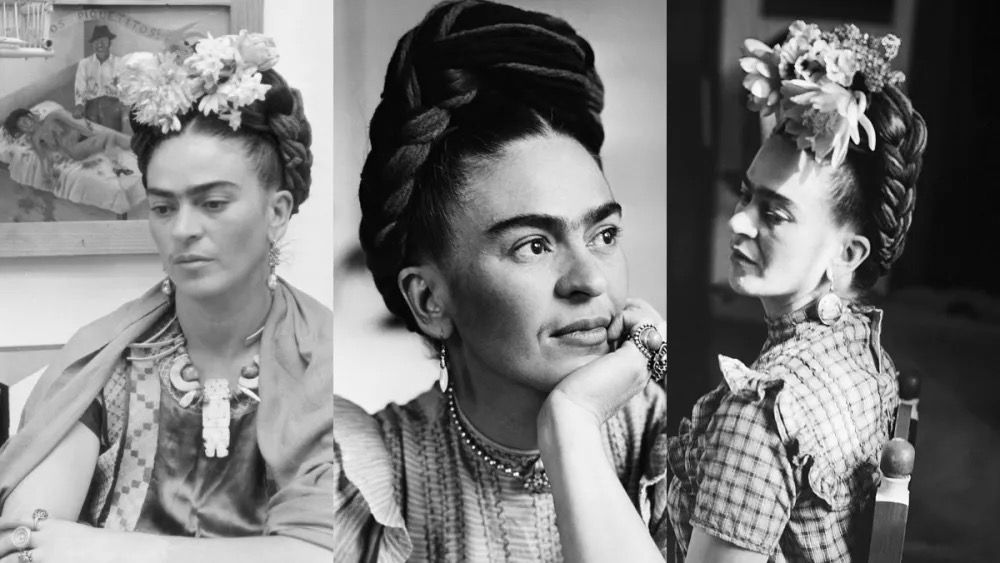
Frida Kahlo: The Art, the Pain, and the Legacy of a Woman Who Painted Her Own Reality
Frida Kahlo remains one of the most recognisable and influential artists of the 20th century—an icon whose life story has become inseparable from her creative legacy. Her image, with bold unibrow, flowers nestled in dark hair, and vivid Tehuana dresses, has become a symbol of strength, independence, and cultural pride. But beyond the myth and commercial iconography lies a woman whose artistic voice emerged from profound suffering, radical self-awareness, and an unwavering commitment to expressing her truth.
To understand Frida Kahlo is to delve into a life in which art was not merely a profession but a means of survival. Her work is a record of her physical and emotional battles, her political beliefs, and her journey toward self-definition.
This expanded essay explores Kahlo’s life, art, relationships, and enduring cultural relevance with a depth suitable for a long-form blog or publication.
Early Life: A Childhood of Contradictions
Born on July 6, 1907, in Coyoacán—then a town on the outskirts of Mexico City—Magdalena Carmen Frida Kahlo y Calderón entered a world undergoing political upheaval. Though she later claimed 1910 as her birth year to align symbolically with the Mexican Revolution, her childhood was shaped more by personal challenges than by politics.
At age six, she contracted polio, leaving her bedridden for months and her right leg thinner and weaker than the left. Despite this, Frida was a spirited, rebellious child—an avid reader, a wanderer, and a passionate student. She attended the prestigious National Preparatory School, one of the few girls admitted, where she explored science, literature, and philosophy, initially dreaming of becoming a doctor.
But everything changed on September 17, 1925.
The Accident That Rewrote Her Destiny
On that day, the bus carrying Frida collided with a streetcar, and her body absorbed the full violence of the crash. A metal handrail impaled her, fracturing her spine and pelvis, crushing bones in her legs and ribs, and causing internal injuries that would bring lifelong pain—and later, infertility.
This moment became the central axis around which her life and art would turn.
Confined to a body cast and immobilised for months, Frida’s mother constructed a special easel that allowed her to paint while lying down. A mirror placed above her bed let her see herself.
"I paint myself because I am the subject I know best."
From these conditions emerged the first of many self-portraits—paintings that would become her signature, not out of narcissism but necessity.
The Evolution of a Style: Where Reality and Symbol Meet
Frida’s work defies simplistic categorization. Though frequently linked with Surrealism, she rejected the label, insisting that she never painted dreams:
"They thought I was a Surrealist, but I wasn’t. I never painted dreams. I painted my own reality."
Her artistic language combined multiple influences:
- Mexican folk art — bright colors, flattened perspective, symbolism
- Religious iconography — retablos, ex-votos, and Catholic motifs
- Indigenous culture — Tehuana dresses, Aztec myths, animals with symbolic roles
- Personal medical imagery — anatomical references, surgical wounds, corsets
Kahlo’s canvases are visual autobiographies. She exposed the interior self—physical pain, heartbreak, longing, cultural pride—with a clarity that still feels radical today. Her self-portraits, making up roughly a third of her oeuvre, were never simple likenesses; they were emotional and symbolic landscapes of the psyche.
Diego Rivera: A Love Story Written in Color and Conflict
In 1929, Frida married the famed muralist Diego Rivera—a man 20 years her senior, physically imposing, charismatic, and already internationally acclaimed. Their marriage was unconventional, passionate, and fraught with turmoil.
Rivera admired Frida’s artistry deeply and recognised her brilliance early. Yet he was also notoriously unfaithful, engaging in affairs that included one with Frida’s own sister. Their marriage survived infidelity, political pressure, temporary separation, and even divorce in 1939—followed by remarriage a year later.
But their relationship was more than a romantic entanglement. They were artistic collaborators, intellectual partners, and political allies in the Mexican Communist movement. Their home was frequented by the likes of Leon Trotsky, artists, and revolutionaries.
Through Rivera, Frida traveled to the United States, where she painted some of her most emotionally charged works, reflecting her complex feelings about industrial capitalism, cultural identity, and isolation.
Art as a Mirror of Womanhood, Loss, and Resilience
Kahlo’s work is extraordinary not only for its aesthetic but for its thematic daring. At a time when women’s inner lives were rarely represented in art, Kahlo confronted:
- Miscarriages and infertility
- Chronic pain and disability
- Sexuality and desire
- Identity conflicts and self-duality
- Love, betrayal, and self-worth
Works like Henry Ford Hospital, The Broken Column, and The Two Fridas are deeply intimate depictions of womanhood in its fullest complexity—far from the idealized female figures that dominated Western art.
She gave visual form to emotions and experiences long considered unfit for the canvas.
Political Commitment and Cultural Identity
Frida did not separate art from life or politics. She was a proud Mexican nationalist, especially in the post-revolutionary era, embracing indigenous traditions, socialist ideals, and anti-imperialist stances.
Her choice to wear Tehuana clothing was not mere fashion—it was a political and cultural declaration:
- Celebrating matriarchal indigenous culture
- Reclaiming Mexican identity from Eurocentric beauty norms
- Masking physical deformities with long, flowing skirts
She became, consciously or not, a visual embodiment of post-revolution Mexican identity.
Final Years: Creating Despite the Breaking Body
Kahlo’s health declined severely in the last decade of her life. She endured over 30 surgeries, long hospital stays, and increasing physical limitations. Yet she continued painting, often from a wheelchair or hospital bed. Her last works—still lifes bursting with colour, political pieces supporting workers’ rights—revealed a spirit that refused to dim.
Her final public appearance was at a demonstration against the CIA-backed coup in Guatemala. Weeks later, on July 13, 1954, she died at the age of 47.
Her death certificate listed a pulmonary embolism, though some speculate other causes. As with much of her life, myth and truth intermingle.
Frida Kahlo’s Legacy: From Artist to Cultural Phenomenon
Kahlo’s reputation grew dramatically posthumously. In the 1970s, feminist scholars resurrected her work, recognising its groundbreaking portrayal of female identity and lived experience. By the 1990s, she had become a global symbol—featured in exhibitions, biographies, films, murals, tattoos, and fashion.
Today, her legacy spans:
- Art history — a foundational figure in autobiographical and symbolic art
- Feminist movements — an icon of bodily autonomy and self-definition
- Queer history — openly bisexual, unapologetically fluid
- Disability activism — a pioneer of pain visibility
- Mexican and Latinx identity — a symbol of cultural pride
Her home, La Casa Azul, now a museum, attracts visitors from around the world, drawn to the space where she lived, loved, suffered, and painted.
Why Frida Kahlo Still Matters Today
Frida Kahlo speaks powerfully to our era of curated images and digital personas. Long before the age of influencers, she understood the power of self-representation—but unlike modern filters and facades, she emphasized honesty over perfection.
Her art embodies authenticity: raw, imperfect, vulnerable, fierce.
Kahlo reminds us that:
- Beauty and pain coexist
- Identity is complex and ever-evolving
- The body can be both a prison and a canvas
- Art can be truth-telling, not escapism
In painting her own reality, she created a universal language that continues to resonate across cultures, generations, and ideologies. Frida Kahlo did not simply paint pictures.
She painted a life—messy, passionate, political, wounded, resilient.
And in doing so, she changed art forever.