
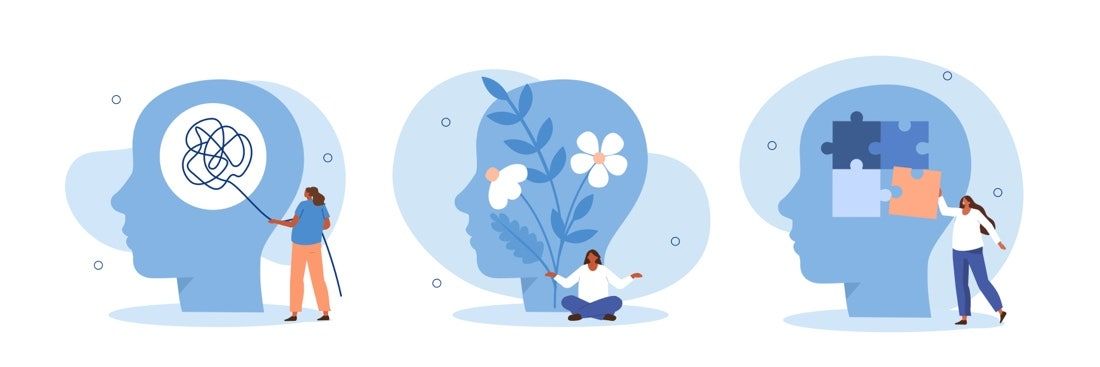
CREATIVITY AND MENTAL HEALTH
There’s a saying that “artists feel everything twice.”
Once when they live it, and again when they create from it.
It’s a poetic notion — but for many creatives, that depth of feeling isn’t just a gift. It’s a burden that sits quietly behind the lens, the canvas, or the notebook. The link between creativity and mental health struggles is as old as art itself. From Van Gogh’s tortured genius to Sylvia Plath’s haunting brilliance, history has painted a picture of the creative mind as both extraordinary and fragile. But in today’s world, as more artists speak openly about their mental health, the conversation is shifting from tragedy to transformation.
The Mind Behind the Art
Creative minds are wired differently. Neurological studies have shown that highly creative individuals display stronger connectivity between the brain’s default mode network (responsible for imagination and introspection) and the executive control network (linked to focus and decision-making). That’s a complicated way of saying creatives think deeply, feel deeply and constantly balance the real world with the imagined one.
It’s a double-edged sword. On one side, this heightened sensitivity fuels innovation, the ability to see beauty in chaos and to turn emotion into expression. On the other, it can lead to overthinking, self-doubt and a constant questioning of worth.
The late Robin Williams once said, “You’re only given a little spark of madness. You mustn’t lose it.” But what he didn’t mention is how heavy that spark can feel when the world goes dark.
Isolation in a Connected World
Despite living in an age of hyper-connectivity, creatives often find themselves feeling painfully alone. The act of creating, whether it’s photography, music, writing or design, can be isolating. Long hours spent refining work can disconnect artists from the outside world. Add social media into the mix and the pressure intensifies.
Scrolling through perfectly curated feeds filled with apparent success stories can distort reality. The constant comparison steals joy, replacing pride with insecurity. It’s easy to forget that every stunning post is often born from struggle, self-doubt and countless late nights questioning, “Am I good enough?”
That question is the ghost that haunts most artists, no matter how accomplished they are.
The Cycle of Highs and Lows
Creativity often thrives on emotion. The rush of inspiration, that electric jolt of an idea coming to life is intoxicating. But what follows can be equally powerful: burnout, exhaustion, and sometimes, depression.
It’s a rhythm many creatives know too well: high energy and boundless imagination, followed by emptiness when the work is done. The cycle can feel endless. But the truth is, it’s not a flaw — it’s biology. The dopamine spikes that accompany creation are real, and when they fade, so too can motivation and mood.
Recognising this natural ebb and flow is key to protecting mental health. The magic lies not in eliminating the lows but in learning to ride them out without losing faith in one’s ability to rise again.
The Therapeutic Power of Art
Yet for all its challenges, creativity remains one of the most powerful healing tools available. Art therapy, music therapy and mindful photography are now widely recognised as methods for managing anxiety, trauma and depression.
Creating gives form to feelings that words alone can’t express. When an artist paints pain, writes heartbreak or photographs resilience, they’re translating chaos into clarity. It’s a form of self-communication — a way to say, “This is how I feel, and that’s okay.”
Photography, in particular, has an incredible grounding power. The act of observing, framing, and capturing the world forces presence. It’s mindfulness with a lens, a moment of control in a life that often feels unpredictable.
Community and Connection
The most dangerous myth about creative suffering is that it must be endured alone. In truth the creative community has always been strongest when it stands together.
Projects that bring artists together, whether it’s group exhibitions, shared studio spaces or supportive initiatives like Visions By Design, act as lifelines. They turn solitude into solidarity. When creatives share their vulnerabilities, it not only lightens their own load but permits others to do the same.
Conversation breaks stigma, compassion builds resilience and creativity, when shared, becomes not a cry for help but a bridge toward healing.
Redefining the “Tortured Artist”
The time has come to challenge the romanticised idea of the suffering artist. Pain can be part of the journey, yes — but it shouldn’t be the destination.
Healthy creativity is sustainable creativity. It involves boundaries and the courage to step back when the mind needs quiet. Just as a camera needs light to capture an image, a mind needs peace to capture inspiration.
Seeking therapy, taking time off, or asking for support doesn’t diminish artistry — it sustains it. The goal isn’t to create despite your mental health; it’s to create with it, to use your experiences as fuel for authenticity rather than as shackles of expectation.
A Final Frame
Creatives see the world not as it is, but as it could be. That’s both a gift and a responsibility to imagine better, to build beauty out of the broken, and to remind others that emotion is not weakness; it’s humanity in motion.
The world needs artists — but it also needs those artists to be well. So if you’re a creative reading this, remember: your mind is your canvas. Protect it. Nourish it. And never mistake the darkness for the end of your story. It’s just the shadow that proves there’s still light somewhere behind you.
Should you be seeking support, Visions By Design exists to bring together creatives to share the burden of excellence and to provide a safe place to bring your visions to fruition.